De-google-ify Internet

Main Page


Aller plus loin

En route vers votre indépendance numérique...? La voie est libre !
Dégooglisons Internet vous propose de la cheminer en plusieurs étapes.

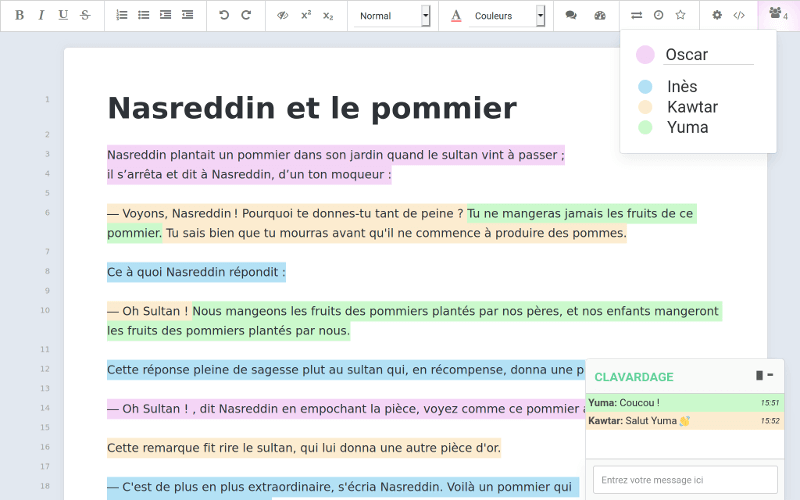
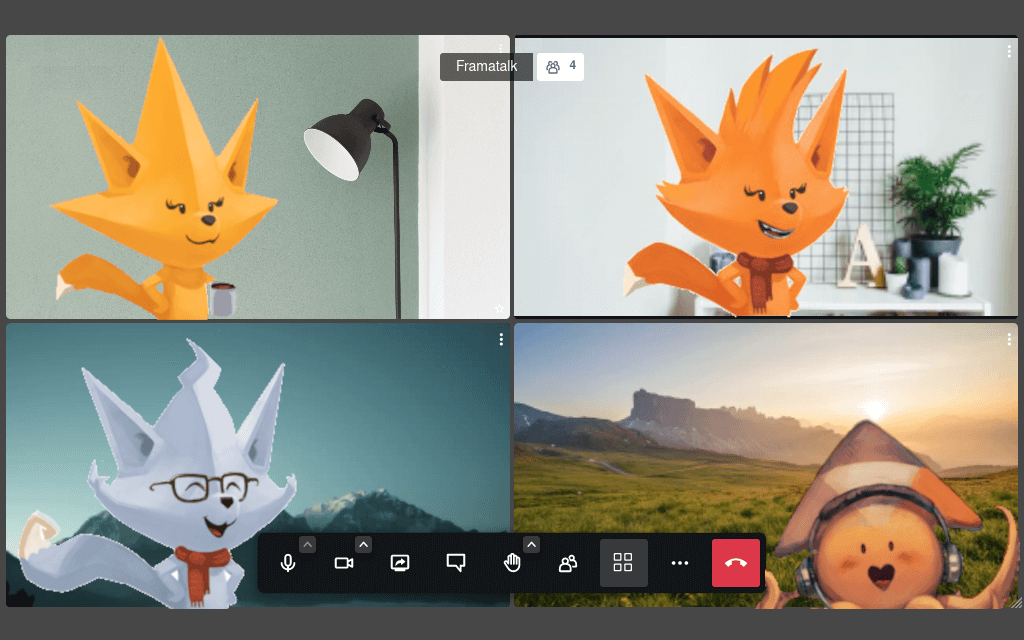
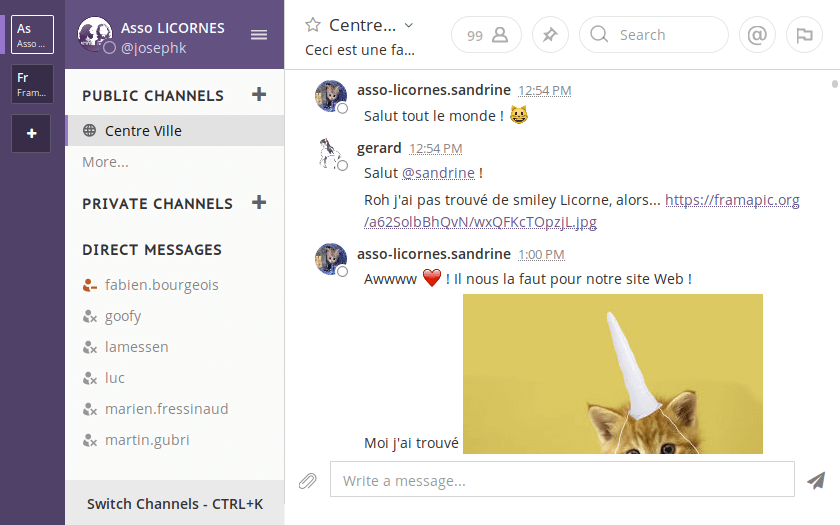
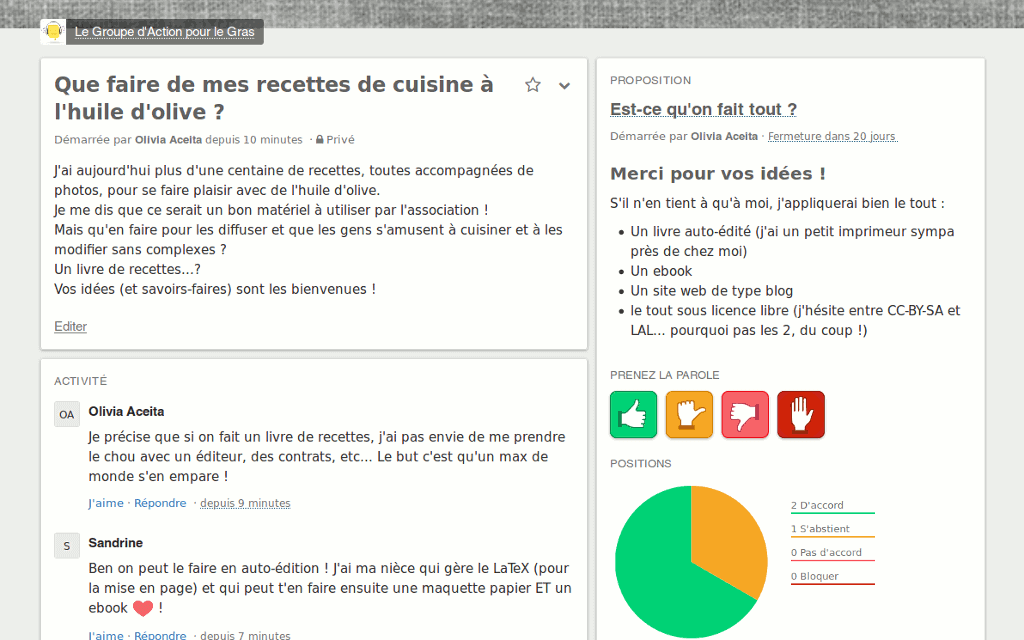
Découvrez et utilisez des services alternatifs (hébergés par Framasoft), en vous aidant de notre documentation collaborative pour apprendre comment ils fonctionnent, comment s’y connecter, comment utiliser leurs fonctionnalités, etc.

Documentation

Si cela vous est disponible, hébergez librement les mêmes logiciels directement sur les serveurs de votre école/association/entreprise/collectif/etc., grâce à nos tutoriels d’auto-hébergement regroupés sur le Framacloud.

Framacloud

Vous pouvez aussi chercher, près de chez vous, un hébergeur de confiance et local parmi les membres du Collectif d’Hébergeurs Alternatifs, Transparents, Ouverts, Neutres et Solidaires : les CHATONS !

CHATONS

Pourquoi ?

Les services sont des logiciels, mais qui sont installés sur le cloud, donc sur l’ordinateur de quelqu’un d’autre (les fameux « serveurs »). Utiliser les services de Google, Apple, Facebook, Amazon, Microsoft... (les « GAFAM »), signifie que vous leur confiez vos données, les traces de votre vie que vous laissez sur Internet. C’est donc une question de confiance.

Cette confiance a permis à une poignée d’acteurs, les GAFAM, d’obtenir un quasi-monopole sur nos vies numériques en centralisant les données d’une immense partie de la population. Les enjeux et dangers sont triples : économiques, technologiques, culturels...

Enjeux et dangers

Nos propositions sont simples : trouver quelles conditions s’imposer pour que cette confiance soit justifiée. Il s’agit de proposer des alternatives à la fois respectueuses de nos êtres et nos diversités, mais qui en plus rendent impossible la reproduction de tels monopoles.

Nos propositions

Pour que vous puissiez déterminer si vous pouvez nous faire confiance, nous publions une présentation du réseau Framasoft (et de l’association loi 1901 qui le soutient), accompagnée de nos rapports et documents administratifs, dans la partie Qui sommes-nous ?

Qui sommes-nous ?

Nous contacter

Nous sommes une petite association (moins de 40 membres, moins de 10 salarié·e·s) qui répond à des demandes très variées :

  • Invitations à des événements ;
  • Demandes presse et médias ;
  • Besoin d’aide sur nos services ;
  • Partage d’expérience technique ;
  • Éclaircissements de tous ordres…

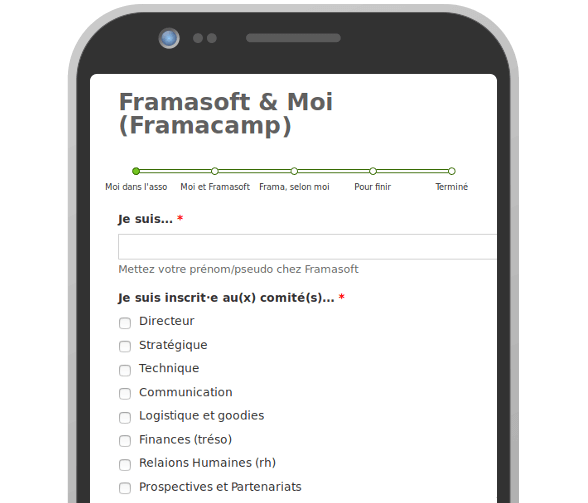
Afin de vous répondre de manière humaine et personnalisée, nous avons mis en place un formulaire unique qui nous permet de trouver au plus vite la personne la mieux à même de vous répondre. Promis, on fera de notre mieux, mais les journées ne font que 24 heures ;).

  Contacter Framasoft

Nous soutenir

Comme toutes nos actions, nos services ne sont pas gratuits : ils sont financés par les dons des personnes qui nous soutiennent par un don, ponctuel ou régulier. Environ 90 % des revenus de l’association Framasoft provient de l’économie du don et servent à financer :

  • les salaires de nos permanent·e·s ;
  • les serveurs et dépenses techniques ;
  • les déplacements, flyers et communications ;
  • nos participations au monde du libre, etc.

Framasoft étant une association reconnue d’intérêt général, un don de 100€ vous reviendra, après défiscalisation, à 34 €. Nous avons mis en place un site unique pour nous soutenir, consulter nos rapports (validés par un commissaire aux comptes), et en savoir plus sur les dons reçus.

Soutenir Framasoft

Ils parlent de nous…

  • Canal+
  • France Culture
  • France Info
  • France Inter
  • L'âge de faire
  • La Tribune
  • Le Figaro
  • L’Humanité
  • Libération
  • Next Inpact

Media area

What is at stake?

In recent years, we have witnessed the widespread corporate concentration of Internet actors (Youtube belonging to Google, WhatsApp to Facebook, Skype to Microsoft, etc.). This centralisation is detrimental, not only because it curbs innovation, but also because it results in a loss of freedom for users, who no longer control their digital existence: their behaviour is continually dissected and analysed so that they can be better targeted by publicity, and their data – which should be private (sites visited, emails exchanged, videos watched, etc.) – can be analysed by government services.

The way that Framasoft would like to deal with this issue is simple: to highlight and provide a Free, Ethical, Decentralised and Solidarity-based alternative to each of these services which deprive users of their freedom.

Threats

The increasingly centralized online services provided by sprawling giants like Google, Amazon, Facebook, Apple, or Microsoft (GAFAM) pose a threat to our digital lives.

 Surveillance

These services track us everywhere, while claiming to give us a better “user experience”. But our behaviour is under constant surveillance. This information can be used to display targeted adverts, but the revelations of the Snowden case have also shown that Internet giants have been forced to communicate this data (sometimes extremely private: emails from Gmail, photos shared on Facebook, Skype conversations, smartphone locations, etc.) to government services. Under the pretense of fighting terrorism, states are able to gather much more intelligence than a "Big Brother" would ever have dreamed of.

Some examples ?

 Privacy

Our data is an extension of ourselves. It tells third-parties where we are, who we are with, our political and sexual orientations, sites we have visited, our favorite recipes, our favorite topics of interest, and so on. While a single data point is not always sensitive, the loss of large amounts of aggregated data can be dangerous (for example if you browse topics about cancer before subscribing to a life insurance)
Your private life is an essential part of your individuality, and in a world where everything has been digitized (ebooks, TV, phones, music, social networks, etc.), it would only take a malicious hacker with access to your smartphone a few minutes to cause you serious harm (taking control of your identity on Facebook, consulting your professional or medical information, making purchases without your authorisation, etc.).

Some examples ?

 Centralization

Major actors of the Internet have become real giants: Google owns Youtube and Waze, Facebook has acquired WhatsApp and Instagram, Microsoft distributes Skype, etc.
This concentration of actors creates multiple issues: what if Facebook were suddenly shut down? And how could we browse the Web if Google went down? We rely more and more on services provided by a small group of suppliers. For example, Apple (iPhone), Google (Android) and Microsoft (Windows Phone) dominate almost the entire mobile OS industry.
Furthermore, the size of these actors impedes innovation: it’s hard to launch a startup that can match up to Apple or Google (the first and second worldwide market capitalisations, respectively).
Finally, The lack of diversity of the giants means they can track many people who are unaware that there may be alternatives, and it can influence the kind of data you receive (a Google search will produce different results for the term “nuclear power” depending on whether Google considers you to be an environmentalist or pro-nuclear power).

Some examples ?

 Termination

Web services used on your computer, smartphone, tablets (and other devices) are usually hosted on the “cloud”: servers spread across the planet, that host not only your data (emails, pictures, files, etc.), but also the application code.
For your data, this raises the issue of sustainability (what would become of your files if Dropbox were to close tomorrow?) and of your ability to switch easily between services (how would you recover your data from Facebook or Picasa and import it, with all the adjoining comments, into another service?).
For applications, this means that you are completely at the mercy of your service provider when it comes to proliferation of advertisements, changes to the user interface, etc., and that you have hardly any control over the way an application works. It is a “black box” that can exhibit malicious behaviour (sending spam SMS without your knowledge, executing malicious code, and so on).
In short, these companies trap us in gilded cages: gilded yes, but cages nonetheless!

Some examples ?

Our proposals

Framasoft wishes to face the threats to our digital lives by offering free, ethical, decentralised, and solidarity-based services.

 Freedom

The story of the Internet itself is one of free software, and this goes for standards as well as protocols. Its potential and popularity are a cause for envy, and large companies would like nothing better than to control it by imposing closed-source, locked-down, and non-interoperable systems.

For the Internet to stay true to its founding principles, those which have led to its success, users must be able to choose free software, that is to say, software whose source code remains open and accessible and is covered by a free software license.

Framasoft is thus committed to using only software with “free” source code.

 Ethics

We promote an Internet based on independence and sharing.

We oppose the exploitation, surveillance, censorship and appropriation of data in favour of transparency (probity), clear presentation of services’ terms of use and refusing discrimination.

Framasoft undertakes not to exploit its users’ data, and to promote a fair and open Web.

 Decentralization

Internet intelligence must remain with each individual player on the network, in a spirit of sharing among peers, to avoid creating a Minitel (a pre-Internet videotext terminal and service) version 2.0.

To ensure equality for all, whether citizens or businesses, not only is it essential to avoid monopolies, but large organizations must be prevented from grabbing personal or public data.

Using tutorials to explain how to increase the use of free solutions that will allow a fairer Internet, we help to distribute codes and diversify usage.

Framasoft is thus committed to facilitating self-hosting and interoperability, so that its users don’t get “locked in”.

 Solidarity

Through the services we deploy, we promote an economic model based on sharing costs and resources, and providing widespread access.

This model also has an educational aspect because we believe that by documenting ways to setup services, many users will in turn be able to share these resources.

We think that, by not infantilizing users and by sharing responsibility for the use of services, it will be possible to regulate abuse.

Framasoft is thus committed to promoting respect and autonomy for its users (as long as this is reciprocated).

In practice

The “de-google-ify Internet” project - which does not exclusively concern Google - consists in offering as many alternative services as possible to those we consider a threat to our digital lives.

Google Docs, Skype, Dropbox, Facebook, Twitter, Google Agenda, Youtube, Doodle, Yahoo! Groups, and many others, are extremely convenient services but they have become far too large and have made us dependent on them. Framasoft wishes to resist this trend and is putting forward a roadmap for setting up alternative services over several years.

These services are free, gratis, open to all (insofar as our technical and financial capabilities allow us), as digital commons. With the goal of decentralising the Internet and promoting self-hosting, we will do our best to ensure that everyone can install their own services (for themselves, for their organisation, or their company).

We are not aiming to compete with these services of course. We merely wish to offer a space that is neutral, non-commercial, and in no way aggressive towards its users.

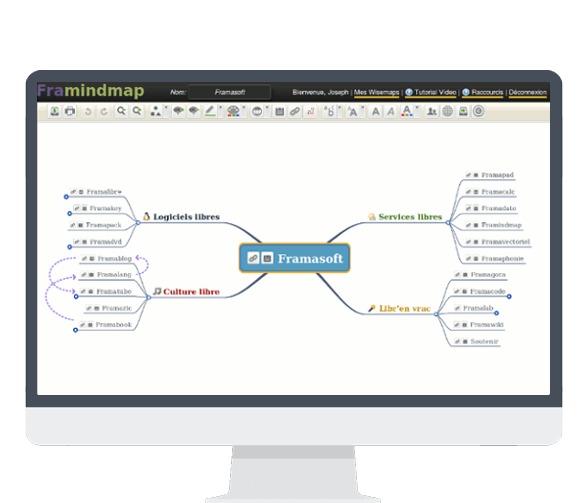
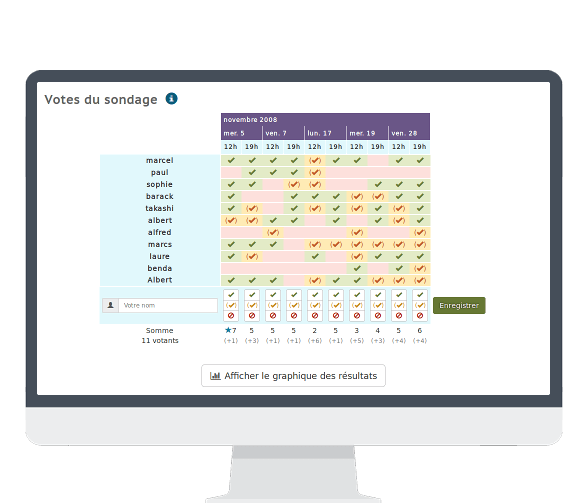
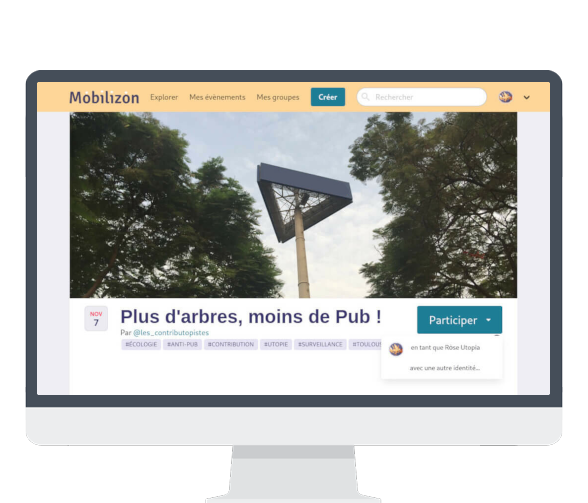
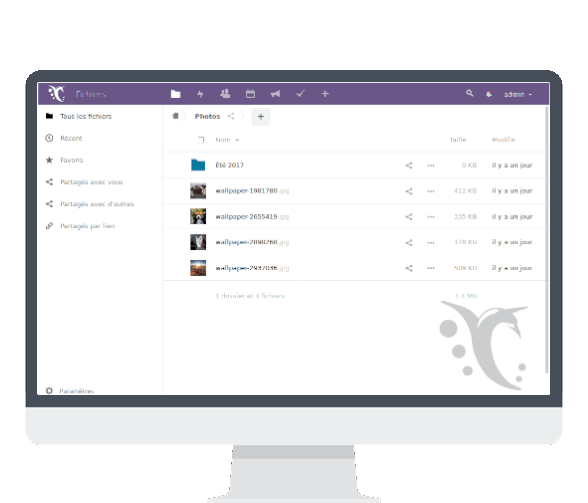
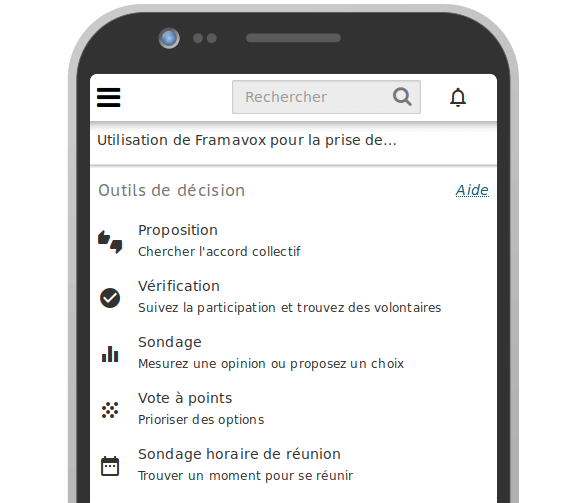
See the list of services we are already offering (and those that we are preparing):

List of services Framasoft

Beginning of the campaign on the 10/07/2014
Last modification on the 12/10/2017

Back to top